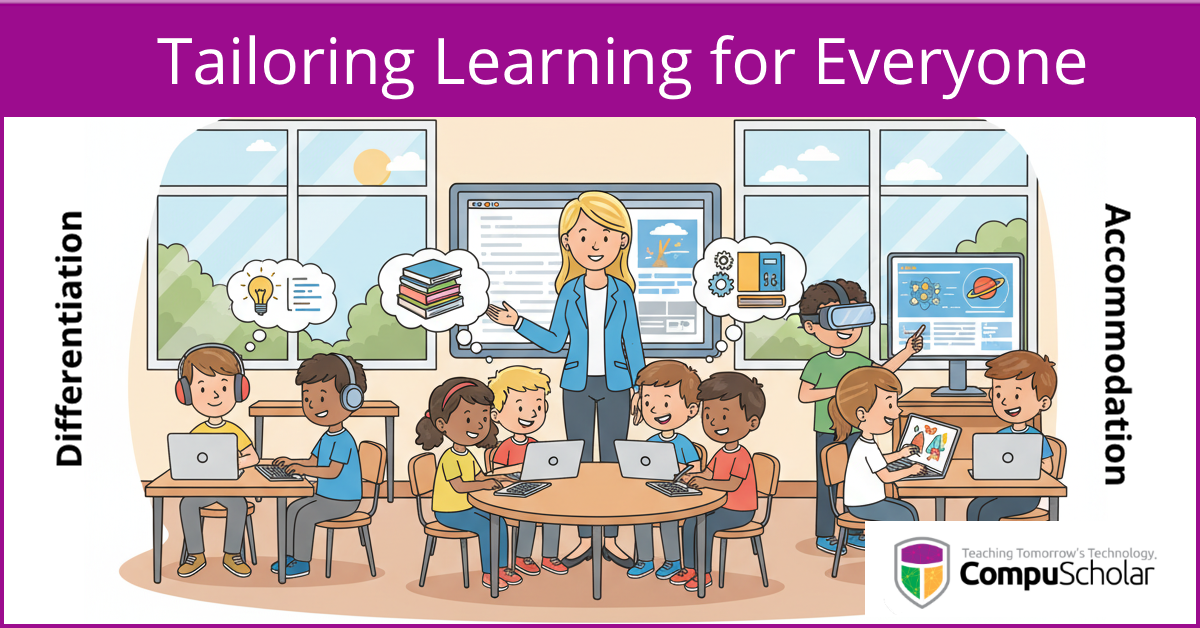
In this post, we'll explore the ways CompuScholar supports Differentiated Instruction and Student Accommodations within our online system and materials. While these subjects can be very broad, we'll focus on some simple definitions:
- Differentiated Instruction - Customizing the student experience to match learning preferences
- Student Accommodations - Customizing the student experience to match learning capabilities
Student Accommodations
 Students have a wide range of capabilities (e.g., below, on, or above grade level). Student Accommodations allow students who are below normal grade level to still complete substantially the same work as the rest of the class, with some extra help. That extra help can come in many forms; two popular examples are allowing extra time or extra attempts. CompuScholar's online system and materials have the following built-in student accommodations:
- Quizzes & Tests - Teachers can customize the time allowed and the number of attempts for individual students.
- Online / Auto-Graded Projects - Teachers can customize the number of "preview" attempts for individual students.
- Offline / Teacher-Graded Projects - Teachers can adjust grading expectations and manually assign grades to match a student's capabilities.
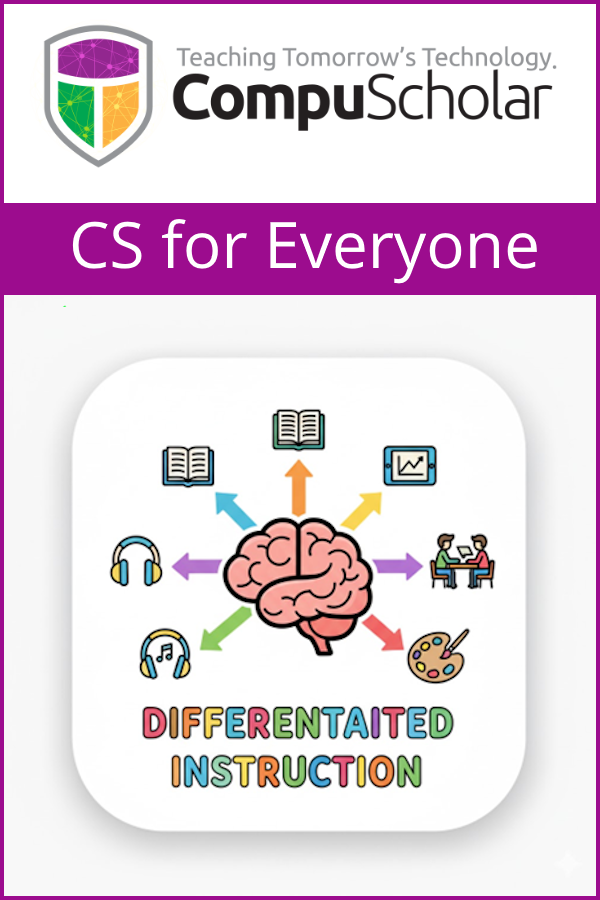
- Activity-Specific Guidance - Some Activity Solution Guides have a yellow "Student Accommodations" box with suggestions for modifications to adjust the difficulty of the exercise.
Differentiated Instruction
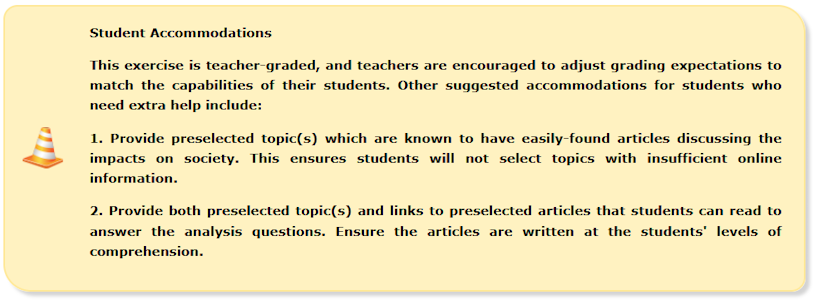
Students may have individual preferences for how they consume instructional content and what they learn. You'll find several supports for Differentiated Instruction in CompuScholar's materials, including:
Multi-media content
Our courses contain instruction in both instructional video and lesson text formats. Audio-visual students will enjoy the brief video introductions to the main lesson concepts, while other students might skip the videos and go directly to the required reading.
Accessibility
Students with different physical needs may consume content in individual ways (such as using a screen reader). The concept of "accessibility" defines how online content should be formatted to be understandable by a wide range of users. CompuScholar's online materials meet WCAG 2.1 and Section 508 standards for accessibility. For more details, please see our February 2024 webinar, "Accessibility of Online Curriculum".
Language Translations
ESL students may reasonably want to consume content in their native language. CompuScholar's text-based content can be translated into any language using the free tools available in all modern web browsers (e.g. Google Translate). We also supply both English and Spanish captions for the instructional videos and full video narrations in text format for additional translation. For a full webinar walk-through of the language translation options, please see our November/December 2023 webinar, "CompuScholar in Spanish and Other Languages".
Optional & Supplemental Lessons
While courses typically have "core" content with required skills, CompuScholar also supplies numerous optional or supplemental chapters at the end of each course. This extra content can be used as enrichment for advanced students or to help students explore topics of personal interest.
For More Information
CompuScholar's Differentiated Instruction and Student Accommodations Guide is posted in our online system. From https://learning.compuscholar.com, click on "Help" and then "Guide to Differentiated Instruction" from the top menu. This PDF illustrates each relevant system feature.
Check out our November/December 2025 Professional Development Webinar - "Differentiated Instruction and Student Accommodations" - for further discussion and a video walk-through of relevant system features. As always, please Contact Us if you have questions!